
Former heavyweight boxing champion Mike Tyson famously said, "Everyone has a plan until they get punched in the mouth."
The same is true in business.
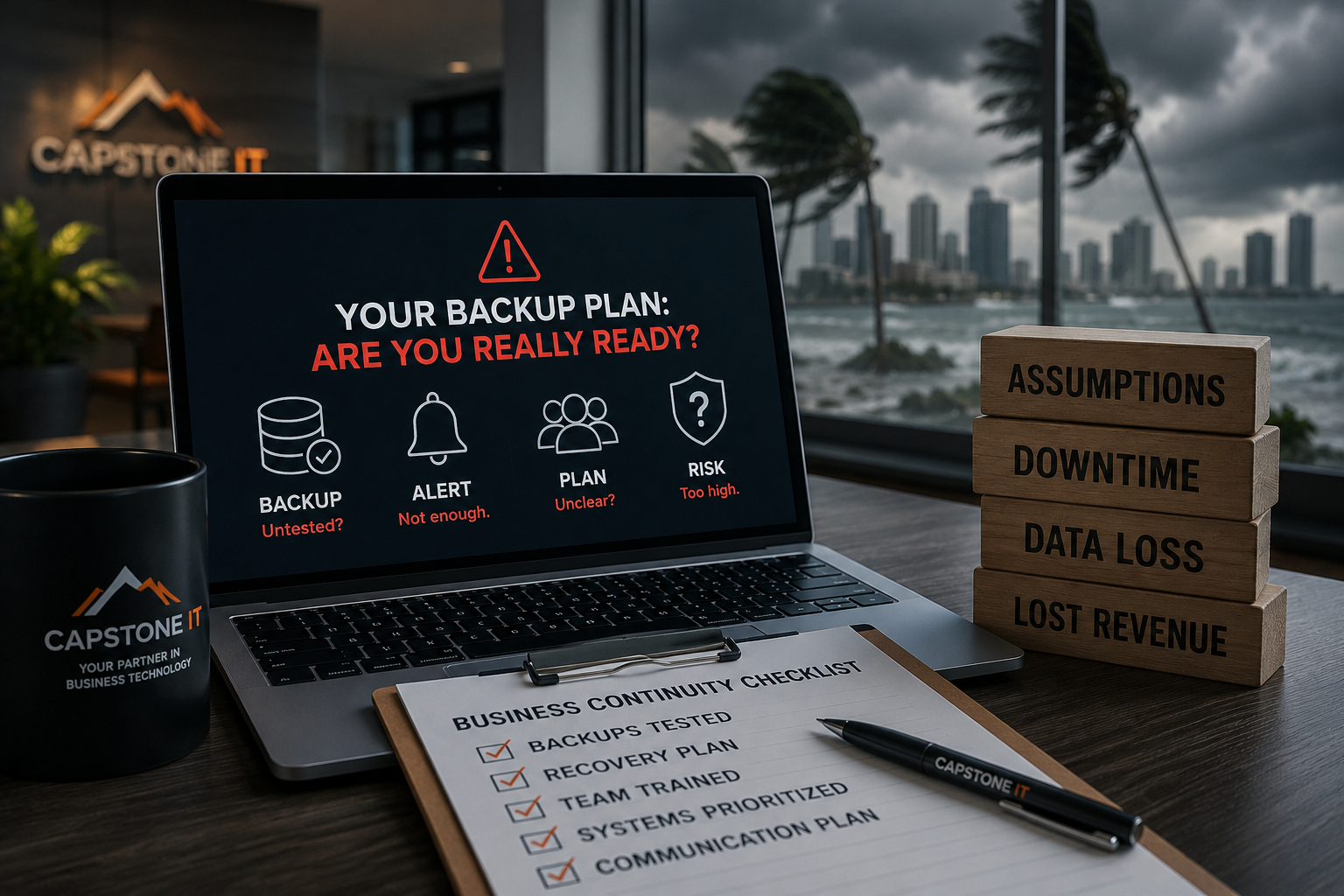
Every organization believes it's prepared for the unexpected—until a ransomware attack encrypts critical files, a server suddenly fails, a hurricane knocks out power, or an employee accidentally deletes important data. It's often in those moments that business owners discover their backup and disaster recovery plan wasn't as strong as they thought.
At Capstone IT, we've worked with businesses throughout Palm Beach, Martin, and St. Lucie Counties, and we've noticed the same assumptions appear again and again. While they seem harmless on the surface, they can lead to costly downtime, lost productivity, and unnecessary stress when something goes wrong.
Here are four of the most common backup assumptions that can put your business at risk.
1. "We're Backed Up, So We're Protected."
Many business owners feel confident because they receive daily backup reports or see a green checkmark indicating everything completed successfully.
But a successful backup isn't the same thing as a successful recovery.
The real question is whether those backups can actually be restored—and how quickly.
If a server crashed this afternoon, would your business be back online in one hour? Four hours? The next day? Would every critical application and file be available, or would employees be waiting while IT tries to rebuild systems?
Backups only prove their value when they've been tested. Without regular recovery testing, you're simply trusting that everything will work when you need it most.
2. "Our Monitoring Software Will Warn Us."
Modern monitoring tools are excellent at detecting problems. They can alert your IT provider when a server goes offline, storage fills up, or suspicious activity is detected.
But alerts alone don't solve problems.
Think of it like a hurricane warning. Knowing a storm is coming doesn't protect your business unless you've already made preparations. You still need a response plan, backup systems, and people who know exactly what to do.
Technology can identify an issue in seconds, but your business continuity plan determines how quickly you recover from it.
3. "Our Team Will Figure It Out."
Every business has talented employees, but even experienced teams struggle during an unexpected crisis if there isn't a documented plan.
Imagine it's late Friday afternoon and your primary server suddenly becomes unavailable. Phones stop working, files can't be accessed, and employees begin asking questions.
Who contacts your IT provider?
Which systems need to be restored first?
How will employees continue working?
How will customers be notified?
Without a documented disaster recovery plan that has been practiced and tested, valuable time is lost while everyone tries to decide what to do next.
The businesses that recover the fastest aren't necessarily the ones with the biggest IT budgets—they're the ones that have already practiced the recovery process.
4. "It Won't Happen to Us."
This may be the most expensive assumption of all.
Most business interruptions aren't caused by dramatic cyberattacks making national headlines. More often, they're the everyday problems businesses encounter every year.
An employee clicks on a phishing email.
A hard drive unexpectedly fails.
A software update creates problems.
Internet service goes down.
A severe summer storm causes an extended power outage.
For businesses in South Florida, hurricane season serves as an annual reminder that business disruptions can happen with very little warning.
The organizations that recover quickly aren't simply lucky—they've prepared for the possibility that something will eventually go wrong.
Preparation Is Always Less Expensive Than Recovery
Business continuity isn't about expecting disaster. It's about making sure your company can continue serving customers when the unexpected happens.
Testing your backups, documenting recovery procedures, and validating your disaster recovery plan can dramatically reduce downtime and help protect your reputation, revenue, and customer relationships.
At Capstone IT, we help businesses across the Treasure Coast and Palm Beaches evaluate their backup strategies, test recovery procedures, and strengthen their overall business continuity plans. Our goal is simple: make sure your business can recover quickly—whether the disruption comes from ransomware, hardware failure, human error, or severe weather.
If you're relying on assumptions instead of tested recovery plans, now is the perfect time to find out where you stand.
Schedule a complimentary Backup & Disaster Recovery Assessment with Capstone IT. We'll review your current backup strategy, identify potential gaps, and help ensure your business is prepared before the next unexpected event puts your operations to the test.