Think about the technology in your house for a moment.
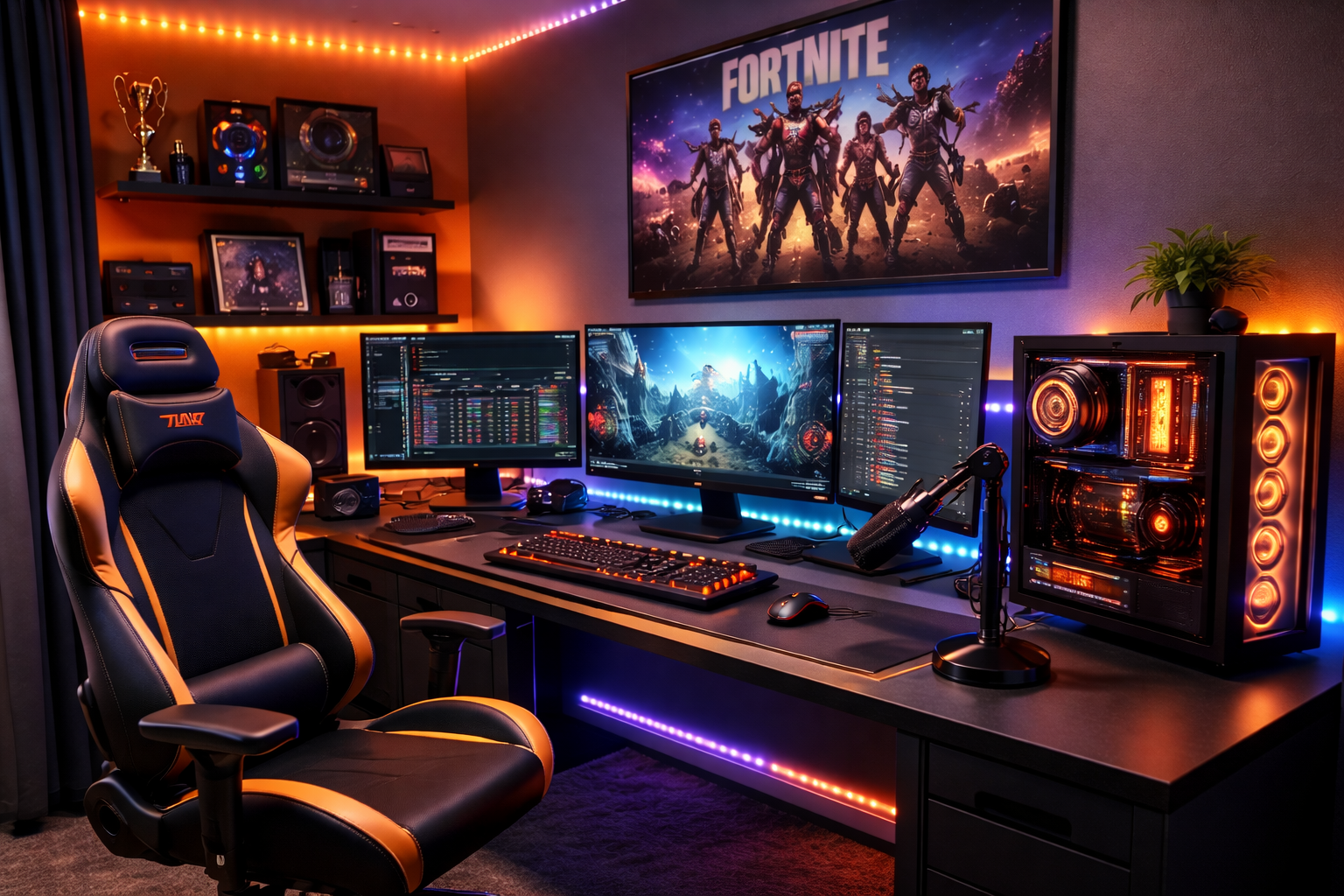
Your kid’s gaming setup is fast, optimized, constantly updated, and carefully maintained. It runs smoothly because they pay attention to every detail—performance, connectivity, security, and reliability.
Now compare that to your business.
Across offices throughout South Florida and the Treasure Coast, we see the same pattern every day. A mix of devices from different years. Software that doesn’t quite integrate. Wi-Fi that works… until it doesn’t. Systems that technically function—but slow everything down.
It’s not that businesses don’t invest in technology. It’s that technology is often added over time instead of designed intentionally.
Gamers optimize. Businesses accumulate.
And that difference has a real cost.
It shows up in small, daily inefficiencies that most teams have learned to tolerate. Waiting for systems to load. Searching for files. Re-entering data. Restarting devices. Working around limitations instead of through them.
Individually, these moments feel minor. But across a team, they add up quickly.
A few minutes here and there doesn’t seem like much—until you realize how often your team is being interrupted. And once focus is broken, it takes time to get it back.
That’s where productivity quietly slips away.
The bigger issue is visibility.
Most business owners don’t realize what’s happening behind the scenes. They’re told, “Everything is working fine.” And technically, that’s true.
But “working” isn’t the same as “working efficiently.”
Are your systems integrated—or just coexisting? Are your tools helping your team move faster—or forcing them to create workarounds? Is anyone proactively monitoring performance—or are you waiting until something breaks?
Those are the questions that matter.
Because modern business performance isn’t driven by hardware alone. It’s driven by how well everything works together—your network, your cloud environment, your security stack, and your workflows.
At Capstone IT, we help businesses move from reactive to proactive.
That means looking at your entire environment—not just individual problems. Identifying what’s outdated, what’s redundant, and what’s creating friction. Then simplifying, optimizing, and aligning your technology with how your business actually operates.
The goal isn’t more technology.
It’s better technology.
If you’re not sure whether your current setup is helping or holding you back, that’s completely normal. Most businesses don’t have the time to step back and evaluate it holistically.
But once you do, the difference is noticeable—both in productivity and in how your team experiences their workday.
Because in business, just like in gaming, performance matters.